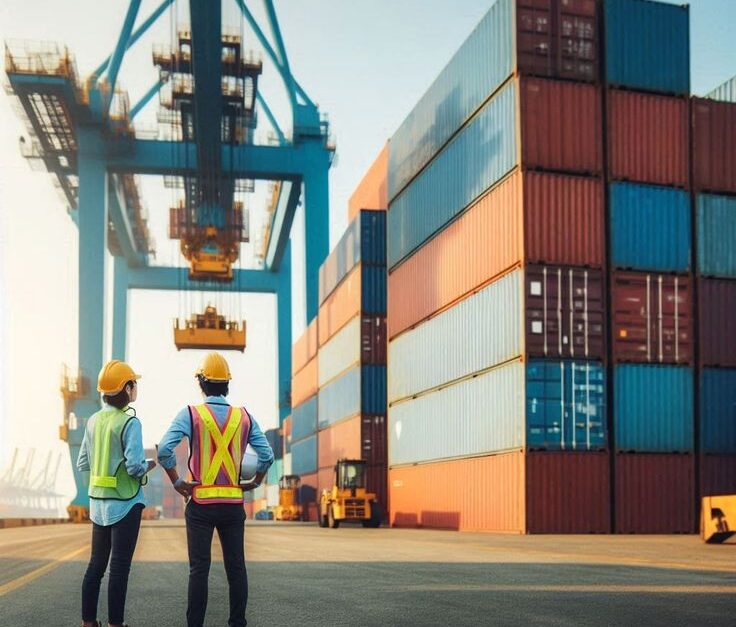
Businesses cannot really afford slow-moving inventory anymore. When products sit around in warehouses for too long, costs start building up fast. Storage costs increase, deliveries slow down, and supply chains become harder to manage.
That’s one reason cross-docking has become much more popular across the UAE in recent years.
Instead of storing products for days or weeks, cross-docking keeps goods moving. Shipments arrive at a facility, get sorted, and then go straight back out for delivery with little or no storage time in between.
What Cross-Docking Actually Means
Cross-docking is basically a transfer point instead of a storage system. Goods arrive at a facility, get sorted, grouped, or redirected, and then leave again for their next destination. Instead of sitting in a warehouse for long periods, the products keep moving through the supply chain much faster.
Instead of receiving goods, storing goods, picking goods, and then shipping goods, cross-docking skips most of those steps. Cargo comes in, gets sorted quickly, and goes back out within hours.
There are a few different ways this works.
Pre-distribution cross-docking happens when products are already labeled and sorted before arrival. The facility is just a transfer point.
Post-distribution cross-docking happens when sorting decisions are made at the facility based on current order data.
Opportunistic cross-docking happens case by case, when an inbound shipment can go directly to fulfill an existing order without any storage needed.
The common thread is speed. Inventory spends as little time as possible between origin and final destination.
How Cross-Docking Cuts Warehouse Storage Costs Significantly
Traditional warehousing has real costs at every single step. Storage space costs money. Handling goods multiple times costs labor. Inventory sitting in a warehouse ties up capital that could be doing something more useful.
Cross-docking addresses each of these problems head on.
Storage costs drop when goods do not sit in a warehouse. Businesses stop paying for space, racking systems, and climate-controlled storage.
Labor costs go down because moving goods from truck to truck in a single operation replaces the many steps of receiving, putaway, picking, packing, and dispatch.
Inventory carrying costs shrink because the faster goods move, the less capital stays tied up in sitting stock.
Damage and loss also go down because fewer handling steps mean fewer chances for something to go wrong.
For businesses running fast-moving inventory solutions, this combination of savings is genuinely meaningful.
Why the UAE Works Well for Cross-Docking
The UAE is built for fast-moving trade. Cargo comes in from all over the world every day, especially through Dubai and Abu Dhabi, so businesses can move products around much faster here compared to many other places.
Big ports like Jebel Ali and major airports in Dubai already move massive amounts of cargo every day. So, products can come in, get sorted, and head back out pretty fast instead of sitting in a warehouse for days.
The roads across the UAE make a difference too. Trucks can move between Dubai, Abu Dhabi, Sharjah, and other emirates fairly easily, which helps deliveries stay on schedule.
For businesses selling across the GCC, the UAE usually becomes the main distribution point. A lot of companies would rather move products through one central hub instead of storing inventory in every single country.
Which Businesses Usually Benefit Most from Cross-Docking?
Cross-docking is mostly useful for businesses that do not want products sitting around for too long.
Retail is a big one. Products arrive, get sorted by store or location, and go back out again without building up large warehouse stock.
Food businesses use it a lot too because fresh products have limited shelf life. The less time products spend sitting in storage, the better.
E-commerce fulfillment depends on fast delivery expectations. Cross-docking lets orders flow from suppliers through distribution without warehousing delays slowing everything down.
Automotive parts distribution runs on just-in-time principles. Parts need to arrive exactly when needed, which is exactly what cross-docking delivers.
Time-sensitive freight movement covering seasonal goods, promotional items, or products with short sell-by windows all benefit from the speed cross-docking provides.
What Good Cross-Docking Services in the UAE Should Include
Not all cross-docking providers are equal. Here is what a well-run operation actually looks like.
The physical facility needs enough dock doors, floor space, and material handling equipment to process inbound and outbound volumes without bottlenecks. A poorly equipped facility destroys the speed advantage entirely.
Real-time visibility matters because good cross-docking depends on knowing what is arriving, when it is arriving, and where it needs to go. Tracking systems and inventory management tools are not optional.
Trained handling teams are essential because cross-docking is fast-paced work. Staff need to sort, label, and transfer goods accurately under time pressure.
Transport coordination between inbound and outbound schedules is critical. Outbound vehicles need to be ready when inbound goods arrive. Poor coordination kills efficiency.
Customs handling capability matters in the UAE because goods arriving from international origins often need customs processing. A provider handling customs clearance in-house removes delays that would otherwise break the flow.
At 7Seas Matrix, we offer cross-docking services in the UAE as part of a full suite of supply chain management in the UAE services. From freight forwarding and cross-docking to warehouse distribution solutions, we handle the coordination that keeps cargo moving.
How Cross-Docking Fits Into a Streamlined Supply Chain Strategy
Cross-docking works best as part of a well-coordinated broader supply chain, not as an isolated tactic.
Businesses that get the most from cross-docking have solid supplier coordination in place. Suppliers know delivery windows and meet them consistently. Real-time demand data helps sorting decisions at the cross-dock. Reliable downstream delivery moves goods from the cross-dock to final destinations fast.
Inventory flow optimization through cross-docking connects to better demand forecasting, better supplier relationships, and better last-mile delivery execution.
This is where a logistics partner like 7 Seas Matrix adds real value. We do not just provide a building to transfer goods through. We coordinate the full chain so cross-docking actually delivers its speed and cost advantages.
Conclusion
Cross-docking services in the UAE make serious sense for businesses that move high volumes, deal with time-sensitive products, or want to reduce the cost and complexity of traditional warehousing. The UAE infrastructure and logistics ecosystem make it one of the strongest environments in the world for cross-docking operations.
At 7Seas Matrix, we work with businesses across industries to build cross-docking and logistics solutions that match actual operational needs. If faster distribution and lower logistics costs sound like the right direction, reach out to the team and talk through how we can help.
Frequently Asked Questions
Is cross-docking suitable for businesses with unpredictable order volumes?
Cross-docking works best with consistent or predictable inbound flows, but flexible facility management and good visibility systems can accommodate variability. Highly unpredictable volumes may need a hybrid model combining buffer storage with cross-dock operations. A logistics partner can help design the right balance for specific demand patterns.
Does cross-docking require changes to supplier agreements?
Often yes. Cross-docking depends on suppliers hitting specific delivery windows and providing advance shipping notices. Suppliers who deliver inconsistently create real problems in a cross-dock setup. Clear delivery standards with suppliers are typically part of setting up any cross-docking program.
How does temperature-controlled cross-docking work in the UAE?
Temperature-controlled cross-docking requires refrigerated docks, cold staging areas, and temperature-monitored transfer processes. Not all facilities have this capability. Businesses moving temperature-sensitive goods need to confirm the provider has proper cold chain infrastructure to maintain product integrity through the full transfer process.