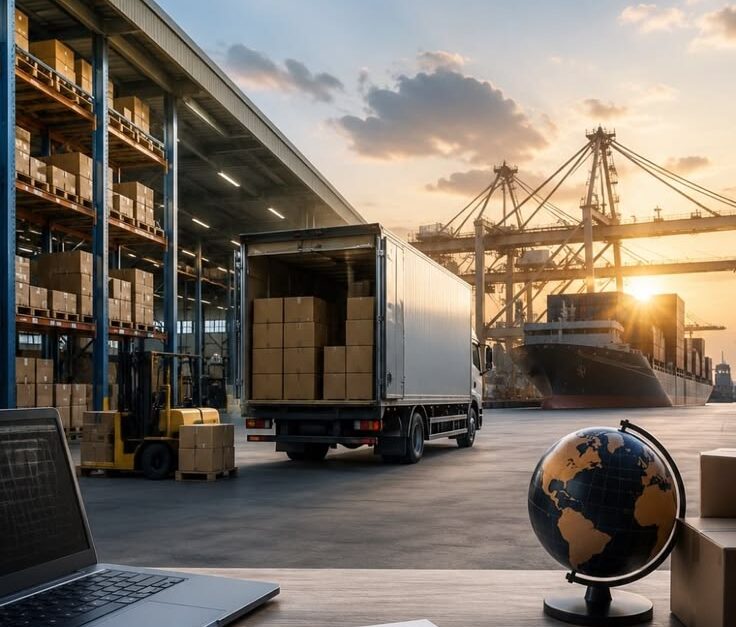
Ask anyone who ships goods through the Middle East where they would like their stock to sit, and a lot of them say the same thing: as close to Jebel Ali as possible.
There is a good reason. Jebel Ali Port is the largest port in the region, and the Jebel Ali Free Zone (JAFZA) wraps around it. Your cargo can come off the vessel and into a warehouse a short drive away, without paying import duty first and without a long trucking trip across the city.
So what are the main benefits of warehousing in Jebel Ali Free Zone? In short, you can defer customs duty until goods leave the zone, cut port and trucking costs, store stock close to a major sea and air gateway, and reach the GCC, Africa, and South Asia from one base.
This guide explains how each of these works, who gains the most, and what to check before you book space.
Warehousing in Jebel Ali Free Zone
Warehousing in Jebel Ali Free Zone means storing, handling, and shipping your goods from a facility located inside JAFZA, the free zone beside Jebel Ali Port in Dubai. JAFZA opened in 1985 and has grown into one of the largest free zones in the world, home to thousands of companies.
Inside the zone, you can hold goods in what is called a bonded or free zone warehouse. In simple words, the cargo is physically in the UAE but has not formally entered the local market yet. That one idea creates most of the benefits you will read about below.
A JAFZA warehouse can do much more than hold boxes on shelves. A good one also handles:
- Receiving containers and breaking them down
- Storing goods by pallet, carton, or unit
- Picking, packing, and labeling orders
- Cold chain and temperature-controlled storage
- Customs paperwork and bonded movements
- Delivery by truck to customers across the UAE and GCC
Why Jebel Ali Port Benefits Importers and Exporters
Before we get to the warehouse itself, it helps to understand why the location is so strong. Many people searching for Jebel Ali port benefits are really asking one question: why should I import or export through here instead of somewhere else?
Here are the main reasons.
It Is a Deep-water Port Built for Big Volumes
Large container ships call at Jebel Ali from Asia, Europe, Africa, and the Americas. More direct sailings usually mean better choices on routes, schedules, and rates.
It Connects to Air Freight
Al Maktoum International Airport (DWC) is close, and Dubai’s other airport is within reach by road. That lets you mix sea and air for the same product line, for example, ocean freight for bulk stock and air freight for urgent top-ups.
It Sits between Three Regions
From Dubai, cargo can go to Europe, Africa, and Asia without long detours. That makes it a natural hub for re-export, where goods arrive in Dubai and then leave again for another country.
It has a Strong Road Network
Trucks leave JAFZA for Saudi Arabia, Oman, Kuwait, Bahrain, and Qatar on well-established routes, which makes GCC distribution much simpler.
The Free Zone and the Port Are Linked
Because they sit side by side, there is less handling between the vessel and the warehouse. Fewer touchpoints usually means fewer delays and a lower chance of damage.
Benefits of JAFZA Warehousing for Importers
If you buy goods from overseas and sell them in the UAE or nearby markets, here is what a Jebel Ali Free Zone warehouse can do for you.
Pay Customs Duty Only When Goods Leave the Zone
The standard UAE customs duty is 5 percent on most goods. If you import a container worth a large amount, that is real money to pay on day one, even if you have not sold a single item.
With bonded warehousing, you can hold the goods in the free zone and pay duty only when you move them to the mainland. If you sell a pallet this week and another next month, you pay duty in steps instead of all at once. That keeps cash free for rent, salaries, and your next purchase order.
If you plan to sell the goods to another country, you may never pay UAE duty on them at all. Rules can change, and each product is different, so check the details with your customs broker before you make any plans based on this.
Spend Less on Port Storage and Trucking
Ports charge fees when containers sit too long. These are often called demurrage and detention. A warehouse close to the port gives you a quick place to unload, so containers go back on time.
Short distances also cut trucking costs. A trip from Jebel Ali Port to a JAFZA warehouse is much shorter than one to a far-off industrial area.
Bring Goods From Many Suppliers Into One Place
Most importers buy from more than one supplier. One may be in China, another in Turkey, and a third in Germany. Instead of dealing with each shipment separately, you can have them all arrive at the same warehouse. Your team sees everything in one stock list, and you can ship out mixed orders to customers.
Check, Label, and Repack Before Selling
Many products need local labels, Arabic text, new packaging, or a quality check before they reach shelves. In a free zone warehouse, you can do this work while the goods are still bonded. If something is wrong, you fix it before it becomes a customer complaint or a compliance issue.
Benefits of JAFZA Warehousing for Distributors
Distributors have a different job. You are not only buying stock. You are moving it out again, often in smaller lots, to many buyers. Here is where JAFZA helps.
Serve the UAE, GCC, and Beyond From One Base
A single warehouse in Jebel Ali Free Zone can supply customers in Dubai, Abu Dhabi, Riyadh, Muscat, and further away. You do not need to rent a separate store in each country. You keep the main stock in one place and send out what each market needs, when it needs it.
Break Big Shipments Into Smaller Orders
A container may arrive with thousands of units, but your customers might order ten or fifty at a time. A JAFZA warehouse can receive the full container, store it, and then pick and pack smaller orders as they come in. This is often called breakbulk or order fulfillment, and it is the core of a distribution business.
Store Goods That Need Special Care
Some products cannot simply sit on a shelf. Food, medicine, cosmetics, and some electronics need steady temperatures. Facilities in JAFZA that offer cold chain logistics keep goods at the right range from the moment they arrive until they leave. That opens the door to categories you may not have been able to handle before.
Handle Online Orders and Returns
If you sell online, speed matters. Customers expect fast delivery and easy returns. A warehouse near the port and major roads, with tracking systems and last-mile delivery, can get parcels out quickly. Returns can come back to the same warehouse to be checked, restocked, or sent back to the supplier. That is called reverse logistics, and it keeps your stock counts accurate.
How a Shipment Moves Through a JAFZA Warehouse
Seeing the steps makes everything easier to understand. Here is a simple example.
Your supplier ships the goods: They go by sea or air to Jebel Ali Port or the nearby airport.
Your freight forwarder files the documents: This includes the bill of lading or air waybill, the invoice, and the packing list.
The cargo arrives and is moved to the warehouse: Because it is going into a bonded area, you do not pay import duty at this point.
The warehouse team receives and records it: They check quantities, note any damage, and add the stock to the inventory system.
You store, repack, or label as needed: The goods wait until you have orders.
An order comes in: The team picks, packs, and prepares the paperwork.
The goods leave: If they are going to the UAE mainland, duty is paid then. If they are going to another country, the paperwork is set up for export.
You track delivery: Good providers give you updates until the goods reach your customer.
When one company handles freight, customs, and warehousing together, these steps flow with far fewer gaps. If different companies handle each stage, small errors tend to slip between them.
Free Zone Warehouse vs. Mainland Warehouse: Which Is Better?
This is a common question, and the honest answer is that it depends on where you sell.
| Question | Free zone warehouse (JAFZA) | Mainland warehouse |
| Is duty paid on arrival? | No, it is deferred while goods stay in the zone | Yes, duty is paid on import |
| Best for | Re-export, regional distribution, stock holding | Selling directly to UAE customers |
| Cash flow | Better, since duty is paid in steps | Duty paid up front |
| Selling in the UAE | Goods must clear customs first | Direct sale |
| Typical user | Importers, traders, regional distributors | Local retailers, wholesalers |
Many businesses use both. They keep their main stock in JAFZA, then move smaller amounts to a mainland location when local demand is high.
Who Gains the Most From Warehousing in JAFZA?
Almost any business that holds physical stock can benefit, but some gain more than others:
- Importers and traders who bring in large volumes and want to delay duty
- Regional distributors who supply several GCC countries
- Ecommerce sellers who need fast dispatch and easy returns
- Food and pharmaceutical companies that need cold storage
- Automotive parts suppliers who manage thousands of small items
- Oil and gas suppliers who move equipment and spares across the region
- Manufacturers who store raw materials and finished goods
Things to Check Before You Rent Warehouse Space in JAFZA
A free zone warehouse is a great tool, but it is smart to go in with open eyes. Here are a few points to think about.
Rental Demand Is High
Space near Jebel Ali is popular, so prices can move up. A shared 3PL (third-party logistics) warehouse can be cheaper than leasing your own building, especially if your volumes are small or change through the year.
Selling to the UAE Market Still Needs Customs Clearance
Free zone storage does not mean you can sell locally without paperwork. Plan for it from the start.
Tax and VAT Rules Have Details
Free zone benefits depend on your activity and license, and rules get updated over time. Speak with your tax advisor and customs broker so you are working from current information.
Not Every Warehouse Suits Every Product
Check that the facility can handle what you store, whether that is food, chemicals, heavy parts, or valuable electronics.
Hidden Charges Can Add Up
Ask for a full list of fees for storage, handling, labeling, documentation, and delivery before you sign.
How to Choose a Warehousing Partner in Jebel Ali Free Zone
When you compare providers, keep it practical. These questions help:
- Is the warehouse inside JAFZA or just nearby?
- Does the same company handle customs clearance and freight forwarding?
- Is there 24/7 security and monitoring?
- Can they offer cold chain and ambient storage?
- Can you see your stock levels and shipment status online?
- Do they deliver across the GCC, or only in Dubai?
- Is pricing clear, with every charge listed?
- Who is your point of contact if something goes wrong?
A partner who answers these without hesitation is usually one who has done this work many times.
Store Your Goods With 7Seas Matrix Logistics in JAFZA
If you are looking for warehousing in Jebel Ali Free Zone, 7Seas Matrix Logistics Services LLC can help. Our office is in JAFZA South, Dubai, so we work close to the port, the roads, and the customs teams you rely on.
We offer secure warehousing with 24/7 monitoring, cold chain and ambient storage, inventory management, bonded logistics, customs brokerage, and air, ocean, and land freight under one roof. We also support e-commerce fulfillment, last-mile delivery, and reverse logistics, and we ship to more than 100 countries.
Whether you are an importer protecting your cash flow or a distributor serving the GCC, we will help you set up a storage plan that fits your goods and your budget.
Call +971 4 398 1600, email support@7seasmatrix.com, or visit www.7seasmatrix.com to get a quote for your warehousing needs.
Frequently Asked Questions
1. What are the main benefits of warehousing in Jebel Ali Free Zone?
The main benefits are customs duty deferral, shorter distance from the port, lower demurrage and trucking costs, and easy access to GCC, African, and South Asian markets. You also get room to repack, label, and consolidate goods before selling them.
2. Do I pay customs duty when goods enter a JAFZA warehouse?
Generally, no. Goods stored in a bonded free zone warehouse are not charged UAE import duty until they leave the zone for the mainland market. Goods re-exported to other countries may not attract UAE duty at all. Always confirm the rules for your product with your customs broker.
3. Is JAFZA warehousing good for small importers?
Yes. Small and mid-sized importers often use a shared 3PL warehouse, where storage and handling costs are spread across many clients. This avoids the cost of leasing a whole building, hiring staff, and running your own systems.
4. Can I sell goods stored in JAFZA to customers in Dubai?
Yes, but the goods must first clear customs and pay any duty due. Many importers move stock from the free zone to the mainland in smaller batches as orders arrive, which keeps cash flow healthy.
5. Can a JAFZA warehouse store food, medicine, and other temperature-sensitive goods?
Yes, if the facility offers cold chain storage. Ask the provider about temperature ranges, monitoring, backup power, and the approvals needed for your type of product before you commit.